Monday, May 24, 2010

Blog 13: Full Draft


Young Goodman Brown By Nathaniel Hawthorne

American writer Nathaniel Hawthorne was born July 4th, 1804 in the city of Salem, Massachusetts. Originally born with the name Nathaniel Hathorne, a 'w' was added to his last name to disassociate himself with his ancestors that were judges in the seventeenth century Salem witch trials (NathanielHawthorneBio). With the ancestry in Salem, Hawthorne was known for his dark romanticism. One of Hawthornes most common theme to write about were conflict between good and evil. The short story "Young Goodman Brown" was published in 1835. This short story is a great combination of Hawthornes ancestry past and his imagination.


Young Goodman Brown takes place in the late 17th century; in Salem Massachusetts. The story begins with Goodman Brown about to set off on a trip while his wife Faith tries to get him to put off his journey, fearing that something might happen to him. Goodman Brown ensured his wife of his safety and told her to pray for him. After leaving his wife and beginning his journey, Goodman Brown promises himself that after tonight when he finishes his task, he will never leave his wife's side and he will spend the rest of his life with her. Walking through the dark and mysterious forest, Goodman Brown becomes anxious. A man appears out from the darkness of the forest and seems to be expecting Goodman Brown and asks him why he is late. Continuing to walk further into the woods, Goodman Brown informs his companion that it is getting late and he must return back to his wife. The man ensures Goodman Brown to continue on and while they walk he will convince him why he should go further, how ever if he is not convincing enough, Goodman Brown could turn and head back. Advancing deeper into the woods with every step, Goodman Brown becomes frustrated with having to complete this task. He tells his companion that he is the first in the family to have to so such an unchristian like thing. The companion then tells Goodman Brown that he knows and has met his father and his fathers father, and all too had to complete such a task. He even tells Goodman Brown that his ancestors weren't such faithful Christians and did many unholy deeds.


In denial of his companions claims, he is then told that the whole village is filled with wickedness. In agonizing pain, Good Brown proceeds further in the woods. The two men then see a women in the distance, they approach her and she to is heading to where they are going. Goodman Brown recognises her, as she taught him catechism. As they continue, Goodman Brown sees more people who he thought were good and faithful Christians. When they finally reach there destination, it is a ceremony around a flame lit alter. To Goodman Browns dismay, he appears at the alter with his wife Faith. About to be covered in blood to steal their alliance with the wickedness, Goodman Brown tells his wife Faith to look into the heavens and resist the evil. In an instant Goodman Brown wakes up on a rock in the forest and heads home to his wife. Unsure what was real or just a dream, Goodman Brown is deeply shaken and is suspicious of everyone around him.


Hawthorne has a way of selecting great word choice to deepen a simple story. He gives characters names that symbolizes who they are. Take Young Goodman Brown for an example. Referring to him as Young Goodman Brown amplifies his youth and lack of experience. It shows that he is still innocent in the world and isn't yet aware of its true array of colors. The disadvantage of youth can also being able to be deceived easily because you are so trust worthy of others; and we see that with Young Goodman Brown, although he is eager to return home, he listens to his companion and travels deeper into the woods. His wife Faith also symbolizes a number of things. In the story she is described as wearing a pink ribbon, the color pink is the product of red and white. Red symbolizes lust and danger, when white stands for purity and innocents. Pink is in between negative and positive but is known as the symbol of pure love (wiki). Faiths name alone says it all, when Young Goodman Brown leaves his wife Faith behind, he also leaves his real Faith with her when he sets out on his journey into the woods. While in the woods his wife Faith appears with him out from no where because his faith had came back to him and he tried to overcome the wickedness of the devil.

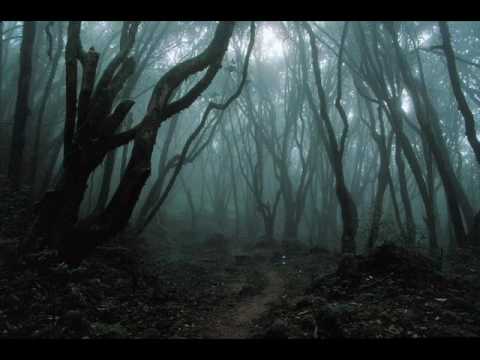
Hawthorne uses the forest as the main setting for the short story. The significance of the forest represents is the mysterious creatures that can be larking in the dark. According to the symbolism dictionary, the forest is a place for testing and holds secrets of nature that one has to find the true meaning of. In a Freudian perspective, the forest can also symbolize the unconscious filled with mysteries (UMICH). Describing Goodman Brown's path as narrow and dark shows how he is surrounded by wickedness and could only move forward, further in.

When it comes to Goodman Brown's companion, it isn't stated that he is the devil, however as they walk through the forest different things infer to him as the devil, like his serpent like staff. During Hawthorne's description of Goodman Brown"s companion he stated, "But the only thing about him, that could be fixed upon as remarkable, was his staff, which bore the likeness of a great black snake . . ." ( line185). In the dictionary of symbols, serpents represent death, destruction and evil. For the Christian religion the serpent was Satan or the devil guises trick Adam and Eve to disregard gods command.Hawthorne gives Goodman Brown's companion a staff that he describes in line 387 “might also be seen to twist and wriggle itself like a live serpent” (YoungGoodmanBrown). The staff shows the devils presence in the forest and when his companion offers it to help Goodman Brown to walk, he refuses to take it and this tells us of how reluctant Goodman Brown is to succumb into the evil in the world. Along their journey Goodman Brown finds people in the forest that he believed to be good, honest Christians. Goodman Brown became aware that even people like his old Sunday school teacher and his minister has been taken by the wickedness of the devil.

"Young Goodman Brown" is a story of secret lives we live and the fight we face against temptation. The theme of the story is that everyone has there own secrets and do things that might not be socially acceptable in society behind closed doors. Hawthorne does a good job of supporting this theme with different symbolic interpretations throughout the story. Although some authors make it difficult to uncover the symbols in their stories, Hawthorne makes them easy to find, thus producing a story more enjoyable for the average reader.

Works Cited

"Forest." University of Michigan. N.p., n.d. Web. 28 May 2010. .

"Nathaniel Hawthorne Biography - life, family, childhood, children, name, history, wife, mother, son, book, old, information, born, college, house, time." Encyclopedia of World Biography. N.p., n.d. Web. 29 May 2010. .

"Pink - Symbolism Wiki." Symbolism Wiki. N.p., n.d. Web. 28 May 2010. .

"Serpent." University of Michigan. N.p., n.d. Web. 28 May 2010. .


"Young Goodman Brown - Wikipedia, the free encyclopedia." Wikipedia, the free encyclopedia. N.p., n.d. Web. 28 May 2010. .


Image From: http://i.ytimg.com/vi/b6R52V9_S0I/0.jpg

Monday, May 17, 2010

Blog 12 , Pre writing: Young Goodman Brown

Young Goodman Brown By Nathaniel Hawthorne

American writer Nathaniel Hawthorne was born July 4th, 1804 in the city of Salem, Massachusetts. Originally born with the name Nathaniel Hathorne, a 'w' was added to his last name to disassociate himself with his ancestors that were judges in the seventeenth century Salem witch trials (NathanielHawthorneBio). With the ancestry in Salem, Hawthorne was known for his dark romanticism. One of Hawthornes most common theme to write about were conflict between good and evil. The short story "Young Goodman Brown" was published in 1835. This short story is a great combination of Hawthornes ancestry past and his imagination.


Young Goodman Brown takes place in the late 17th century; in Salem Massachusetts. The story begins with Goodman Brown about to set off on a trip while his wife Faith tries to get him to put off his journey, fearing that something might happen to him. Goodman Brown ensured his wife of his safety and told her to pray for him. After leaving his wife and beginning his journey, Goodman Brown promises himself that after tonight when he finishes his task, he will never leave his wife's side and he will spend the rest of his life with her. Walking through the dark and mysterious forest, Goodman Brown becomes anxious. A man appears out from the darkness of the forest and seems to be expecting Goodman Brown and asks him why he is late. Continuing to walk further into the woods, Goodman Brown informs his companion that it is getting late and he must return back to his wife. The man ensures Goodman Brown to continue on and while they walk he will convince him why he should go further, how ever if he is not convincing enough, Goodman Brown could turn and head back. Advancing deeper into the woods with every step, Goodman Brown becomes frustrated with having to complete this task. He tells his companion that he is the first in the family to have to so such an unchristian like thing. The companion then tells Goodman Brown that he knows and has met his father and his fathers father, and all too had to complete such a task. He even tells Goodman Brown that his ancestors weren't such faithful Christians and did many unholy deeds.


In denial of his companions claims, he is then told that the whole village is filled with wickedness. In agonizing pain, Good Brown proceeds further in the woods. The two men then see a women in the distance, they approach her and she to is heading to where they are going. Goodman Brown recognises her, as she taught him catechism. As they continue, Goodman Brown sees more people who he thought were good and faithful Christians. When they finally reach there destination, it is a ceremony around a flame lit alter. To Goodman Browns dismay, he appears at the alter with his wife Faith. About to be covered in blood to steal their alliance with the wickedness, Goodman Brown tells his wife Faith to look into the heavens and resist the evil. In an instant Goodman Brown wakes up on a rock in the forest and heads home to his wife. Unsure what was real or just a dream, Goodman Brown is deeply shaken and is suspicious of everyone around him.


Hawthorne has a way of selecting great word choice to deepen a simple story. He gives characters names that symbolizes who they are. Take Young Goodman Brown for an example. Referring to him as Young Goodman Brown amplifies his youth and lack of experience. It shows that he is still innocent in the world and isn't yet aware of its true array of colors. The disadvantage of youth can also being able to be deceived easily because you are so trust worthy of others; and we see that with Young Goodman Brown, although he is eager to return home, he listens to his companion and travels deeper into the woods. His wife Faith also symbolizes a number of things. In the story she is described as wearing a pink ribbon, the color pink is the product of red and white. Red symbolizes lust and danger, when white stands for purity and innocents. Pink is in between negative and positive but is known as the symbol of pure love (wiki). Faiths name alone says it all, when Young Goodman Brown leaves his wife Faith behind, he also leaves his real Faith with her when he sets out on his journey into the woods. While in the woods his wife Faith appears with him out from no where because his faith had came back to him and he tried to overcome the wickedness of the devil.


Works Cited

"Nathaniel Hawthorne Biography - life, family, childhood, children, name, history, wife, mother, son, book, old, information, born, college, house, time." Encyclopedia of World Biography. N.p., n.d. Web. 29 May 2010. .

"Pink - Symbolism Wiki." Symbolism Wiki. N.p., n.d. Web. 28 May 2010. .


Image From: http://garble.files.wordpress.com/2007/11/goodmanbrown.jpg

Monday, May 10, 2010

Blog 11: Chosen Story; Young Goodman Brown by Nathaniel Hawthrone


This short story was published in 1835. Written by American author Nathaniel Hawthorne. The short story takes place in the late 17th century, in Salem Massachetts. The story all begins when the main character, Goodman Brown leaves his home and wife for 3 months. While gone he travels deep into the forest. Having to battle with what might be real or a figure of his imgaination, Goodman Brown has to fight to kept his faith. After returning from his journey Goodman Brown is uncertain what just happened and sees everyone around him differently.

I decided to pick this story because I was unsure of what to write about. Coming to this class, reading about the supernatural wasn't something I was used to (I only like watching the movies), so I read all the stories on the class blog and remembered reading this story before many years ago and enjoyed it so I don't see why I wouldn't now.

The approach I've decided to analyze the story is by picking out symbols and acrhetypes in the story.


Imagine from: http://coursesite.uhcl.edu/hsh/whitec/LITR/4232/images/authors/hawgoodbrown.bmp

Monday, May 3, 2010

Blog 10 Reflection_


In the beginning of this course, I thought it would be fairely easier then other English courses, however I was horribly mistaken. Having to do essay's online rather just handing papers in, is a bit more difficult. Besides that, the class calls for the deep understanding of different elements so we can find examples and further break down text. Out from all of the elements and things we have discussed in class so far, I'll have to say Joseph Campbell's Hero's Quest has been the most interesting to me. I find it how crazy Campbell hit the needle right on its head when he simplifies how the story is supposed to be told and how all of literature and film follows what you can call a cycle of stages to receive a similar outcome which would be becoming a hero, helping others or over coming self battles (Hero's Quest). I always personally would say to people "oh, that ending was predictable" or " that was your typical action, romance, horror movie" and now reading up on Campbell's work I finally understand why it always seemed like that to me. Now I feel I can analyze movies better now knowing how the characters journey should go about and I could see how directors decides to make characters go through Campbell's monomyth.

Sunday, May 2, 2010

Blog 9, Heros Quest: The Reaping


Joseph Campbell was born March 26 in 1904. He was a American mythologist and a writer (wiki). Campbell is well known for his designed Monomyth of the Hero's Quest. In the Hero's Quest Campbell discusses how all hero's must complete or go through a series of phases upon their fulfillment of a task. Campbell broke down the Quest into 3 stages. The first stage is the departure, followed by the initiation, and ending with the return of the hero. As the hero goes through each stage, they are tested in character and strength. Campbell believes this is the foundation in which is followed in many myths, stories and movies. An example of Campbell's Hero's Quest in action is the movie "The Reaping," released on April 5th 2007.

In "The Reaping" the main character Katherine Winter (played by Hilary Swank) is a former Christian missionary. With the faith of god Katherine travel abroad to help others in third world countries; during her mission to Sudan Katherine went along with her husband, daughter and Father Michael Costigan. After their arrival an unfortunate drought hit the country that lasted for one whole year. The locals blamed it on the Christian missionary’s presence that caused their land to run dry and believed the only way they could get rain again would be to sacrifice Katherine's family and in exchange, god would bless them with water. Losing her family in Sudan made Katherine turned her back on god and started teaching at a college, lecturing on how behind every "miracle" is a scientific explanation.

The first stage of Campbell's hero's journey, the departure, Campbell says before a hero can begin a journey someone must seek them for help or there has to be a problem that must be solved. In "The Reaping," Katherine is approached after one of her lectures by a man named Doug. Doug tells Katherine that in his little town called Heavan, the river has turned as red as blood. Katherine is quick to brush him off and tells him there could be hundreds of chemical reasons why the river changed colors and states that she research's more religiously spiritual miracles. At that moment that's when Doug tells Katherine the whole story of how the town members believe a little girl named Loren is the one to blame. Doug told Katherine that Loren is being accused of killing her older brother by the lake. After Loren killed her brother the river ran red with blood. Doug also tells Katherine that the town members are very religious causing them to believe the blood in the river is the beginning of the 10 plagues.

Prior to the initial calling by Doug, Father Michael Costigan the priest that Katherine used to be dearly close to in the past has been trying to get in touch with her but because of her drop in faith she has been ignoring his calls. With no escape and being handed the phone she has no choice but to speak to him and that is when he tells her that she is in great danger. The priest call is what Campbell calls the 'refusal of the call' to the duty but Katherine thinks about what he says but still decides to go to Doug's town to investigate. Heading to her destination with her partner Ben from the college, while driving they are surrounded by trees and are in the middle of nowhere. Joking about their surroundings, Katherine's partner Ben turns on the radio and all that is playing is a preacher saying god is everything and everywhere. Even their cell phones don't receive any signal. This scene in the movie is an example of crossing the threshold, meaning that they have now reached the area of the unknown.

The second stage Campbell says the hero goes through a series of test. It is the tests and tasks that lead to the transformation of a regular person to a hero. While there Katherine struggles with more emotional battles then psychical. She is challenged with her past and overcoming the tragic loss of her husband and daughter. Occasionally having flash backs of when her family were killed, feeling as though it was her fault and she could no longer do good. Katherine is forced to continue to get over their death in order to try to solve this mystery. Katherine is going against the race of time and as time goes one, the 10 plagues are going on in the town. First it’s the river, then dead frogs, flies, death of livestock, lice, boils, hail, locus and the death of the first born. Not knowing what will happen after all 10 plagues are complete, Katherine tries her best to find the little girl Loren to try and end what was happening.

The last and final stage is where the hero achieves their task at hand. Overcoming the obstacles that tried to hold them back created a stronger character within them. After this experience, the knowledge they gain is what makes them a true hero. When Katherine finds out what she must do, she is able to defeat what turns out to be a colt that runs in the town. While the town made it seem like Loren was to blame for the plague happening and that she must die. It turns out that the plague happened to protect Loren from the town members. Katherine was sent there to kill the little girl by Doug but because of Father Michael Costigan's help, Katherine was able to see past Doug's lies and did the right thing to save Loren. Katherine ends her journey and shows the hero's return when she drives away with Loren in her arms.

Along the hero's journey Joseph Campbell says films and literature also share the element of archetypes. Archetypes can be defined as the original model of an ideal figure or a symbol that is universally recognized (wiki). In the movie "The Reaping" you see several different archetypes. The main archetype is Katherine. Katherine is an angel that was sent to protect Loren. Katherine also symbolizes the archetype of a mother. Even though Katherine lost her daughter in Sudan, she felt a strong need to protect Loren.

The priest Father Costigan represented the archetype, the old wise man. The priest is the old wise man because he was able to foresee what was going to happen and tried to guide Katherine down the right path. Although he knew his help wasn't wanted, he still stood determined to help Katherine with her task.

Doug plays the role of the devil. He lies to Katherine and Ben about the real reason why he needs Loren dead. Doug is very deceitful and acts as he is trying to help the town. He even charms Katherine so she would trust him and join his side of the darkness.

Joseph Campbell also discussed what he called "Myth to Live By." A myth to live by is what morals or what it is that we take in and use to help us with our lives in a deep spiritual way. Putting this into context with the movie "The Reaping," Katherine saved Loren from being killed, making her a hero. However after her journey Katherine realizes she also saved herself by restoring her faith in god.


Work Cited


"Archetype - Wikipedia, the free encyclopedia." Wikipedia, the free encyclopedia. N.p., n.d. Web. 30 Apr. 2010. .

"Joseph Campbell - Wikipedia, the free encyclopedia."Wikipedia, the free encyclopedia. N.p., n.d. Web. 30 Apr. 2010.ph_Campbell

"Monomyth - Wikipedia, the free encyclopedia." Wikipedia, the free encyclopedia. N.p., n.d. Web. 30 Apr. 2010.

"The Reaping (2007)."The Internet Movie Database (IMDb). N.p., n.d. Web. 30 Apr. 2010.


Image From: http://www.shopcrazy.com.ph/wp-content/images/2007/03/the-reaping-04.jpg