Monday, June 14, 2010

Blog Entry 16: Final Reflection


As the semester comes to an end, I’ll honestly miss this kind of structured class. This course has made me think outside the box when it comes to literature and writing essays. It wasn’t easy to have the semester focus on the topic "the supernatural", however it got me to explore my horizons with the kinds of genres there are. It was hard to get used to but became fun with the different stories we have read.

Instead of being in a regular English class, sitting in normal desks with nothing but books and a teacher in the front of the classroom talking their head off. We were actually involved with the text. You (Professor Smith) encouraged us to go and find out side web sources. You were the first professor that I've had that said it was okay to use Wikipedia.

Personally I think I have progressed from blog entry to blog entry. The first couple of blog entries I felt silly and felt why everyone in the class has to read what I write. But now I see the blog entries as a good way to interact with classmates for help without being shy and not wanting to speak to strangers.

After this class I definitely see stories differently. Now as I read, I instantly notice symbols and archetypes. I take my time to see what the author wants us to know but doesn’t want to say directly. I also like seeing how I can make the story kind of my know with my own interpretations on what the author is trying to say.

I would recommend this class for anyone who doesn’t like reading or writing and for those who think they have read every book. I think this course will change their mindset and make them work harder with such a supernatural topic.

Image From: http://brownsharpie.courtneygibbons.org/wp-content/comics/2008-12-22-nightmares.jpg

Sunday, June 6, 2010

Blog 15: Final Draft and Complete Essay =]


The Story Told Within Nathaniel Hawthorne’s “Young Goodman Brown”

American writer Nathaniel Hawthorne was born July 4th, 1804 in the city of Salem, Massachusetts. Interestingly Hawthorne was originally born with the name Nathaniel Hathorne. A 'w' was added to his last name to disassociate himself with his ancestors that were judges in the seventeenth century Salem witch trials. His grandfather played an important role in the prosecution of a dozen so called witches (NathanielHawthorneBio). With the ancestry in Salem, Hawthorne was known for his dark romanticism. One of Hawthorne’s most common themes to write about is conflicts between good and evil. Beginning his writing career early Hawthorne published most of his writings anonymously (wiki). In 1835, Hawthorne published the short story "Young Goodman Brown." This short story is a great combination of Hawthorne's ancestry as well as his imagination on good and evil.

Young Goodman Brown takes place in the late 17th century; in Salem Massachusetts. The story begins with Goodman Brown about to set off on a trip. His wife Faith tries to get him to put off his journey fearing that something might happen to him. Goodman Brown ensured his wife of his safety and told her to pray for him. After leaving his wife and beginning his journey, Goodman Brown promises himself that after tonight when he finishes his task, he will never leave his wife's side and he will spend the rest of his life together with her. Walking through the dark and mysterious forest, Goodman Brown becomes anxious. A man appears out from the darkness of the forest and seems to be expecting Goodman Brown. The man asks him why he is late. Continuing to walk further into the woods, Goodman Brown informs his now companion that it is getting late and he must return back to his wife. The man ensures Goodman Brown to continue on and while they walk he will convince him why he should go further, however if he is not convincing enough, Goodman Brown could turn and head back. Advancing deeper into the woods with every step, Goodman Brown becomes frustrated with having to complete this task. He tells his companion that he is the first in the family to have to do such an unchristian like task. The companion then tells Goodman Brown that he knows and has met his father and his father’s father, and all too had to complete such a task. He even tells Goodman Brown that his ancestors weren't such faithful Christians and did many unholy deeds.

In denial of his companion’s claims, he is then told that the whole village is filled with wickedness. In agonizing pain, Good Brown proceeds further in the woods. The two men then see a woman in the distance, they approach her and she too is heading to where they are going. Goodman Brown recognizes her, as she taught him catechism. As they continue, Goodman Brown sees more people who he thought were good and faithful Christians. When they finally reach their destination, there is a ceremony around a flame lit altar. To Goodman Browns dismay, he appears at the altar with his wife Faith. About to be covered in blood to steal their alliance with the wickedness, Goodman Brown tells his wife Faith to look into the heavens and resist the evil. In an instant Goodman Brown wakes up on a rock in the forest and heads home to his wife. Unsure what was real or just a dream; Goodman Brown is deeply shaken and is suspicious of everyone around him.

The real history of the setting in Young Goodman Brown; Salem Massachusetts, brings a lot of insight to the story. Salem is the mostly notorious in history for its witch trials in 1692. Citizens of the town encouraged the trails to take palace and prosecute who they believed to be devil worshipers. Having the author Hawthorne actually having a connection to this time, deepens the meaning of the story. Those who were thought to be witches were going against god and worshipping the devil. This is what Goodman Brown is confronted with in the forest. He was forced to see people act out of the social norm and practice something he didn't believe in.

Hawthorne has a way of selecting great word choice to deepen a simple story. He gives characters names that symbolize who they are. Take Young Goodman Brown for an example; referring to him as Young Goodman Brown amplifies his youth and lack of experience. It shows that he is still innocent in the world and isn't yet aware of its true array of colors. The disadvantage of youth can also be the ability to be deceived easily because you are so trust worthy of others; we see that with Young Goodman Brown. Although he is eager to return home, he listens to his companion and travels deeper into the woods. His wife Faith also symbolizes a number of things. In the story she is described as wearing a pink ribbon, the color pink is the product of red and white. Red symbolizes lust and danger, when white stands for purity and innocents. Pink is in between negative and positive but is known as the symbol of pure love (wiki). Faiths name alone says it all, when Young Goodman Brown leaves his wife Faith behind, he also leaves his real Faith with her when he sets out on his journey into the woods. While in the woods his wife Faith appears with him out from nowhere because his faith had came back to him as he tried to overcome the wickedness of the devil.

Hawthorne also uses a number of symbols that help bring imagery to the story. The symbols he uses further explains the plot without giving it all away, making the reader interact with the story. The forest was the main setting for the short story. The significance of the forest represents is the mysterious creatures that can be larking in the dark. According to the symbolism dictionary, the forest is a place for testing and holds secrets of nature that one has to find the true meaning of. In a Freudian perspective, the forest can also symbolize the unconscious filled with mysteries (UMICH). Describing Goodman Brown's path as narrow and dark also shows how he is surrounded by wickedness and could only move forward, further into the devils grasp.

When it comes to Goodman Brown's companion, it isn't stated that he is the devil. However as they walk through the forest different things infer to him as the devil, like his serpent like staff. During Hawthorne's description of Goodman Brown’s companion he stated, "But the only thing about him, that could be fixed upon as remarkable, was his staff, which bore the likeness of a great black snake . . ." ( line185). In the dictionary of symbols, serpents represent death, destruction and evil. For the Christian religion the serpent was Satan or the devil disguised to trick Adam and Eve to disregard gods command. Hawthorne gives Goodman Brown's companion a staff that he describes in line 387 “might also be seen to twist and wriggle itself like a live serpent” (YoungGoodmanBrown). The staff shows the devils presence in the forest and when his companion offers it to help Goodman Brown to walk, he refuses to take it. The refusal tells us how reluctant Goodman Brown is to succumb into the evil in the world. Along their journey Goodman Brown finds people in the forest that he believed to be good, honest Christians. Goodman Brown became aware that even people like his old Sunday school teacher and his minister has been taken by the wickedness of the devil.

"Young Goodman Brown" is a story of the secret lives we live and the fight we face against temptation. The theme of the story is that everyone has their own secrets and does things that might not be socially acceptable in society behind closed doors. Hawthorne does a good job of supporting this theme with different symbolic interpretations throughout the story. Although some authors make it difficult to uncover the symbols in their stories, Hawthorne makes them easy to find, which makes the story more enjoyable for any type of reader.

Works Cited

"Forest." University of Michigan. N.p., n.d. Web. 28 May 2010. .

"Nathaniel Hawthorne Biography - life, family, childhood, children, name, history, wife, mother, son, book, old, information, born, college, house, time." Encyclopedia of World Biography. N.p., n.d. Web. 29 May 2010. .

"Pink - Symbolism Wiki." Symbolism Wiki. N.p., n.d. Web. 28 May 2010. .

"Serpent." University of Michigan. N.p., n.d. Web. 28 May 2010. .

"Young Goodman Brown - Wikipedia, the free encyclopedia." Wikipedia, the free encyclopedia. N.p., n.d. Web. 28 May 2010.


Image from:http://american-literature.mhs.marietta-city.org/modules/groups/homepagefiles/announcement/-956598.jpg

Blog 14: What is Left to Do??


Writing this essay isn't so bad however it isn't the easiest either. My main focus that needs to be done it lengthening my descriptions as well as supporting and putting my sources. I need to try and find more significant symbols to discuss and expand on them.


Image From: http://www.nationalnursingreview.com/images/NNR-Cartoon.gif

Monday, May 24, 2010

Blog 13: Full Draft


Young Goodman Brown By Nathaniel Hawthorne

American writer Nathaniel Hawthorne was born July 4th, 1804 in the city of Salem, Massachusetts. Originally born with the name Nathaniel Hathorne, a 'w' was added to his last name to disassociate himself with his ancestors that were judges in the seventeenth century Salem witch trials (NathanielHawthorneBio). With the ancestry in Salem, Hawthorne was known for his dark romanticism. One of Hawthornes most common theme to write about were conflict between good and evil. The short story "Young Goodman Brown" was published in 1835. This short story is a great combination of Hawthornes ancestry past and his imagination.


Young Goodman Brown takes place in the late 17th century; in Salem Massachusetts. The story begins with Goodman Brown about to set off on a trip while his wife Faith tries to get him to put off his journey, fearing that something might happen to him. Goodman Brown ensured his wife of his safety and told her to pray for him. After leaving his wife and beginning his journey, Goodman Brown promises himself that after tonight when he finishes his task, he will never leave his wife's side and he will spend the rest of his life with her. Walking through the dark and mysterious forest, Goodman Brown becomes anxious. A man appears out from the darkness of the forest and seems to be expecting Goodman Brown and asks him why he is late. Continuing to walk further into the woods, Goodman Brown informs his companion that it is getting late and he must return back to his wife. The man ensures Goodman Brown to continue on and while they walk he will convince him why he should go further, how ever if he is not convincing enough, Goodman Brown could turn and head back. Advancing deeper into the woods with every step, Goodman Brown becomes frustrated with having to complete this task. He tells his companion that he is the first in the family to have to so such an unchristian like thing. The companion then tells Goodman Brown that he knows and has met his father and his fathers father, and all too had to complete such a task. He even tells Goodman Brown that his ancestors weren't such faithful Christians and did many unholy deeds.


In denial of his companions claims, he is then told that the whole village is filled with wickedness. In agonizing pain, Good Brown proceeds further in the woods. The two men then see a women in the distance, they approach her and she to is heading to where they are going. Goodman Brown recognises her, as she taught him catechism. As they continue, Goodman Brown sees more people who he thought were good and faithful Christians. When they finally reach there destination, it is a ceremony around a flame lit alter. To Goodman Browns dismay, he appears at the alter with his wife Faith. About to be covered in blood to steal their alliance with the wickedness, Goodman Brown tells his wife Faith to look into the heavens and resist the evil. In an instant Goodman Brown wakes up on a rock in the forest and heads home to his wife. Unsure what was real or just a dream, Goodman Brown is deeply shaken and is suspicious of everyone around him.


Hawthorne has a way of selecting great word choice to deepen a simple story. He gives characters names that symbolizes who they are. Take Young Goodman Brown for an example. Referring to him as Young Goodman Brown amplifies his youth and lack of experience. It shows that he is still innocent in the world and isn't yet aware of its true array of colors. The disadvantage of youth can also being able to be deceived easily because you are so trust worthy of others; and we see that with Young Goodman Brown, although he is eager to return home, he listens to his companion and travels deeper into the woods. His wife Faith also symbolizes a number of things. In the story she is described as wearing a pink ribbon, the color pink is the product of red and white. Red symbolizes lust and danger, when white stands for purity and innocents. Pink is in between negative and positive but is known as the symbol of pure love (wiki). Faiths name alone says it all, when Young Goodman Brown leaves his wife Faith behind, he also leaves his real Faith with her when he sets out on his journey into the woods. While in the woods his wife Faith appears with him out from no where because his faith had came back to him and he tried to overcome the wickedness of the devil.

Hawthorne uses the forest as the main setting for the short story. The significance of the forest represents is the mysterious creatures that can be larking in the dark. According to the symbolism dictionary, the forest is a place for testing and holds secrets of nature that one has to find the true meaning of. In a Freudian perspective, the forest can also symbolize the unconscious filled with mysteries (UMICH). Describing Goodman Brown's path as narrow and dark shows how he is surrounded by wickedness and could only move forward, further in.

When it comes to Goodman Brown's companion, it isn't stated that he is the devil, however as they walk through the forest different things infer to him as the devil, like his serpent like staff. During Hawthorne's description of Goodman Brown"s companion he stated, "But the only thing about him, that could be fixed upon as remarkable, was his staff, which bore the likeness of a great black snake . . ." ( line185). In the dictionary of symbols, serpents represent death, destruction and evil. For the Christian religion the serpent was Satan or the devil guises trick Adam and Eve to disregard gods command.Hawthorne gives Goodman Brown's companion a staff that he describes in line 387 “might also be seen to twist and wriggle itself like a live serpent” (YoungGoodmanBrown). The staff shows the devils presence in the forest and when his companion offers it to help Goodman Brown to walk, he refuses to take it and this tells us of how reluctant Goodman Brown is to succumb into the evil in the world. Along their journey Goodman Brown finds people in the forest that he believed to be good, honest Christians. Goodman Brown became aware that even people like his old Sunday school teacher and his minister has been taken by the wickedness of the devil.

"Young Goodman Brown" is a story of secret lives we live and the fight we face against temptation. The theme of the story is that everyone has there own secrets and do things that might not be socially acceptable in society behind closed doors. Hawthorne does a good job of supporting this theme with different symbolic interpretations throughout the story. Although some authors make it difficult to uncover the symbols in their stories, Hawthorne makes them easy to find, thus producing a story more enjoyable for the average reader.

Works Cited

"Forest." University of Michigan. N.p., n.d. Web. 28 May 2010. .

"Nathaniel Hawthorne Biography - life, family, childhood, children, name, history, wife, mother, son, book, old, information, born, college, house, time." Encyclopedia of World Biography. N.p., n.d. Web. 29 May 2010. .

"Pink - Symbolism Wiki." Symbolism Wiki. N.p., n.d. Web. 28 May 2010. .

"Serpent." University of Michigan. N.p., n.d. Web. 28 May 2010. .


"Young Goodman Brown - Wikipedia, the free encyclopedia." Wikipedia, the free encyclopedia. N.p., n.d. Web. 28 May 2010. .


Image From: http://i.ytimg.com/vi/b6R52V9_S0I/0.jpg

Monday, May 17, 2010

Blog 12 , Pre writing: Young Goodman Brown

Young Goodman Brown By Nathaniel Hawthorne

American writer Nathaniel Hawthorne was born July 4th, 1804 in the city of Salem, Massachusetts. Originally born with the name Nathaniel Hathorne, a 'w' was added to his last name to disassociate himself with his ancestors that were judges in the seventeenth century Salem witch trials (NathanielHawthorneBio). With the ancestry in Salem, Hawthorne was known for his dark romanticism. One of Hawthornes most common theme to write about were conflict between good and evil. The short story "Young Goodman Brown" was published in 1835. This short story is a great combination of Hawthornes ancestry past and his imagination.


Young Goodman Brown takes place in the late 17th century; in Salem Massachusetts. The story begins with Goodman Brown about to set off on a trip while his wife Faith tries to get him to put off his journey, fearing that something might happen to him. Goodman Brown ensured his wife of his safety and told her to pray for him. After leaving his wife and beginning his journey, Goodman Brown promises himself that after tonight when he finishes his task, he will never leave his wife's side and he will spend the rest of his life with her. Walking through the dark and mysterious forest, Goodman Brown becomes anxious. A man appears out from the darkness of the forest and seems to be expecting Goodman Brown and asks him why he is late. Continuing to walk further into the woods, Goodman Brown informs his companion that it is getting late and he must return back to his wife. The man ensures Goodman Brown to continue on and while they walk he will convince him why he should go further, how ever if he is not convincing enough, Goodman Brown could turn and head back. Advancing deeper into the woods with every step, Goodman Brown becomes frustrated with having to complete this task. He tells his companion that he is the first in the family to have to so such an unchristian like thing. The companion then tells Goodman Brown that he knows and has met his father and his fathers father, and all too had to complete such a task. He even tells Goodman Brown that his ancestors weren't such faithful Christians and did many unholy deeds.


In denial of his companions claims, he is then told that the whole village is filled with wickedness. In agonizing pain, Good Brown proceeds further in the woods. The two men then see a women in the distance, they approach her and she to is heading to where they are going. Goodman Brown recognises her, as she taught him catechism. As they continue, Goodman Brown sees more people who he thought were good and faithful Christians. When they finally reach there destination, it is a ceremony around a flame lit alter. To Goodman Browns dismay, he appears at the alter with his wife Faith. About to be covered in blood to steal their alliance with the wickedness, Goodman Brown tells his wife Faith to look into the heavens and resist the evil. In an instant Goodman Brown wakes up on a rock in the forest and heads home to his wife. Unsure what was real or just a dream, Goodman Brown is deeply shaken and is suspicious of everyone around him.


Hawthorne has a way of selecting great word choice to deepen a simple story. He gives characters names that symbolizes who they are. Take Young Goodman Brown for an example. Referring to him as Young Goodman Brown amplifies his youth and lack of experience. It shows that he is still innocent in the world and isn't yet aware of its true array of colors. The disadvantage of youth can also being able to be deceived easily because you are so trust worthy of others; and we see that with Young Goodman Brown, although he is eager to return home, he listens to his companion and travels deeper into the woods. His wife Faith also symbolizes a number of things. In the story she is described as wearing a pink ribbon, the color pink is the product of red and white. Red symbolizes lust and danger, when white stands for purity and innocents. Pink is in between negative and positive but is known as the symbol of pure love (wiki). Faiths name alone says it all, when Young Goodman Brown leaves his wife Faith behind, he also leaves his real Faith with her when he sets out on his journey into the woods. While in the woods his wife Faith appears with him out from no where because his faith had came back to him and he tried to overcome the wickedness of the devil.


Works Cited

"Nathaniel Hawthorne Biography - life, family, childhood, children, name, history, wife, mother, son, book, old, information, born, college, house, time." Encyclopedia of World Biography. N.p., n.d. Web. 29 May 2010. .

"Pink - Symbolism Wiki." Symbolism Wiki. N.p., n.d. Web. 28 May 2010. .


Image From: http://garble.files.wordpress.com/2007/11/goodmanbrown.jpg

Monday, May 10, 2010

Blog 11: Chosen Story; Young Goodman Brown by Nathaniel Hawthrone


This short story was published in 1835. Written by American author Nathaniel Hawthorne. The short story takes place in the late 17th century, in Salem Massachetts. The story all begins when the main character, Goodman Brown leaves his home and wife for 3 months. While gone he travels deep into the forest. Having to battle with what might be real or a figure of his imgaination, Goodman Brown has to fight to kept his faith. After returning from his journey Goodman Brown is uncertain what just happened and sees everyone around him differently.

I decided to pick this story because I was unsure of what to write about. Coming to this class, reading about the supernatural wasn't something I was used to (I only like watching the movies), so I read all the stories on the class blog and remembered reading this story before many years ago and enjoyed it so I don't see why I wouldn't now.

The approach I've decided to analyze the story is by picking out symbols and acrhetypes in the story.


Imagine from: http://coursesite.uhcl.edu/hsh/whitec/LITR/4232/images/authors/hawgoodbrown.bmp

Monday, May 3, 2010

Blog 10 Reflection_


In the beginning of this course, I thought it would be fairely easier then other English courses, however I was horribly mistaken. Having to do essay's online rather just handing papers in, is a bit more difficult. Besides that, the class calls for the deep understanding of different elements so we can find examples and further break down text. Out from all of the elements and things we have discussed in class so far, I'll have to say Joseph Campbell's Hero's Quest has been the most interesting to me. I find it how crazy Campbell hit the needle right on its head when he simplifies how the story is supposed to be told and how all of literature and film follows what you can call a cycle of stages to receive a similar outcome which would be becoming a hero, helping others or over coming self battles (Hero's Quest). I always personally would say to people "oh, that ending was predictable" or " that was your typical action, romance, horror movie" and now reading up on Campbell's work I finally understand why it always seemed like that to me. Now I feel I can analyze movies better now knowing how the characters journey should go about and I could see how directors decides to make characters go through Campbell's monomyth.

Sunday, May 2, 2010

Blog 9, Heros Quest: The Reaping


Joseph Campbell was born March 26 in 1904. He was a American mythologist and a writer (wiki). Campbell is well known for his designed Monomyth of the Hero's Quest. In the Hero's Quest Campbell discusses how all hero's must complete or go through a series of phases upon their fulfillment of a task. Campbell broke down the Quest into 3 stages. The first stage is the departure, followed by the initiation, and ending with the return of the hero. As the hero goes through each stage, they are tested in character and strength. Campbell believes this is the foundation in which is followed in many myths, stories and movies. An example of Campbell's Hero's Quest in action is the movie "The Reaping," released on April 5th 2007.

In "The Reaping" the main character Katherine Winter (played by Hilary Swank) is a former Christian missionary. With the faith of god Katherine travel abroad to help others in third world countries; during her mission to Sudan Katherine went along with her husband, daughter and Father Michael Costigan. After their arrival an unfortunate drought hit the country that lasted for one whole year. The locals blamed it on the Christian missionary’s presence that caused their land to run dry and believed the only way they could get rain again would be to sacrifice Katherine's family and in exchange, god would bless them with water. Losing her family in Sudan made Katherine turned her back on god and started teaching at a college, lecturing on how behind every "miracle" is a scientific explanation.

The first stage of Campbell's hero's journey, the departure, Campbell says before a hero can begin a journey someone must seek them for help or there has to be a problem that must be solved. In "The Reaping," Katherine is approached after one of her lectures by a man named Doug. Doug tells Katherine that in his little town called Heavan, the river has turned as red as blood. Katherine is quick to brush him off and tells him there could be hundreds of chemical reasons why the river changed colors and states that she research's more religiously spiritual miracles. At that moment that's when Doug tells Katherine the whole story of how the town members believe a little girl named Loren is the one to blame. Doug told Katherine that Loren is being accused of killing her older brother by the lake. After Loren killed her brother the river ran red with blood. Doug also tells Katherine that the town members are very religious causing them to believe the blood in the river is the beginning of the 10 plagues.

Prior to the initial calling by Doug, Father Michael Costigan the priest that Katherine used to be dearly close to in the past has been trying to get in touch with her but because of her drop in faith she has been ignoring his calls. With no escape and being handed the phone she has no choice but to speak to him and that is when he tells her that she is in great danger. The priest call is what Campbell calls the 'refusal of the call' to the duty but Katherine thinks about what he says but still decides to go to Doug's town to investigate. Heading to her destination with her partner Ben from the college, while driving they are surrounded by trees and are in the middle of nowhere. Joking about their surroundings, Katherine's partner Ben turns on the radio and all that is playing is a preacher saying god is everything and everywhere. Even their cell phones don't receive any signal. This scene in the movie is an example of crossing the threshold, meaning that they have now reached the area of the unknown.

The second stage Campbell says the hero goes through a series of test. It is the tests and tasks that lead to the transformation of a regular person to a hero. While there Katherine struggles with more emotional battles then psychical. She is challenged with her past and overcoming the tragic loss of her husband and daughter. Occasionally having flash backs of when her family were killed, feeling as though it was her fault and she could no longer do good. Katherine is forced to continue to get over their death in order to try to solve this mystery. Katherine is going against the race of time and as time goes one, the 10 plagues are going on in the town. First it’s the river, then dead frogs, flies, death of livestock, lice, boils, hail, locus and the death of the first born. Not knowing what will happen after all 10 plagues are complete, Katherine tries her best to find the little girl Loren to try and end what was happening.

The last and final stage is where the hero achieves their task at hand. Overcoming the obstacles that tried to hold them back created a stronger character within them. After this experience, the knowledge they gain is what makes them a true hero. When Katherine finds out what she must do, she is able to defeat what turns out to be a colt that runs in the town. While the town made it seem like Loren was to blame for the plague happening and that she must die. It turns out that the plague happened to protect Loren from the town members. Katherine was sent there to kill the little girl by Doug but because of Father Michael Costigan's help, Katherine was able to see past Doug's lies and did the right thing to save Loren. Katherine ends her journey and shows the hero's return when she drives away with Loren in her arms.

Along the hero's journey Joseph Campbell says films and literature also share the element of archetypes. Archetypes can be defined as the original model of an ideal figure or a symbol that is universally recognized (wiki). In the movie "The Reaping" you see several different archetypes. The main archetype is Katherine. Katherine is an angel that was sent to protect Loren. Katherine also symbolizes the archetype of a mother. Even though Katherine lost her daughter in Sudan, she felt a strong need to protect Loren.

The priest Father Costigan represented the archetype, the old wise man. The priest is the old wise man because he was able to foresee what was going to happen and tried to guide Katherine down the right path. Although he knew his help wasn't wanted, he still stood determined to help Katherine with her task.

Doug plays the role of the devil. He lies to Katherine and Ben about the real reason why he needs Loren dead. Doug is very deceitful and acts as he is trying to help the town. He even charms Katherine so she would trust him and join his side of the darkness.

Joseph Campbell also discussed what he called "Myth to Live By." A myth to live by is what morals or what it is that we take in and use to help us with our lives in a deep spiritual way. Putting this into context with the movie "The Reaping," Katherine saved Loren from being killed, making her a hero. However after her journey Katherine realizes she also saved herself by restoring her faith in god.


Work Cited


"Archetype - Wikipedia, the free encyclopedia." Wikipedia, the free encyclopedia. N.p., n.d. Web. 30 Apr. 2010. .

"Joseph Campbell - Wikipedia, the free encyclopedia."Wikipedia, the free encyclopedia. N.p., n.d. Web. 30 Apr. 2010.ph_Campbell

"Monomyth - Wikipedia, the free encyclopedia." Wikipedia, the free encyclopedia. N.p., n.d. Web. 30 Apr. 2010.

"The Reaping (2007)."The Internet Movie Database (IMDb). N.p., n.d. Web. 30 Apr. 2010.


Image From: http://www.shopcrazy.com.ph/wp-content/images/2007/03/the-reaping-04.jpg

Sunday, April 25, 2010

Essay Rewrite, Blog 8


Edgar Allen Poe was born in Boston Massachusetts on January 19, 1809 and died on October 7th, 1849. Poe's father abandoned the family while he was still young and shortly after his mother died causing Poe to become an orphan at the age of 2 (kirjasto, pars.2). Poe was taken in by a Richmond merchant named John Allan. While under Allan's care, Poe attended University of Virgina but later got expelled due to lack of tuition payments. After having to leave school Poe joined the Army in 1827. A year later in 1828, Poe received a dishonorable discharge from the Army for intentional neglect of his duties (kirjasto, pars.3). In 1836 Poe married his 13 year old cousin Virgina Clemm. Their marriage came to an end in 1847 when Virgina died from tuberculosis (kirjasto, pars.5). Although Poe had a tragic childhood it was these events that made him a great writer. All of his writings can be tied back to people and events from his life. One of my favorite poems by Poe is tittled Annabel Lee and was published in 1849; this was Poe's last poem before he died at the age of 40 (associated content).

Annabel Lee is a narrative poem that consist of 6 stanzas. This poem follows a repetition of long "e" sounding words. In the first stanza, line 2 ends in sea, line 4 ends in Lee and line 6 ends with me. Stanzas 2 and 3 both repeat a sea, Lee, me pattern. The pattern in stanza 4 changes to me, sea, and Lee. For stanza 5 its we, we, sea, and Lee. The last stanza changes to Lee, Lee, sea and sea; however even though the words changed, the poem still follows the long "e" sound repetition. Another scheme found in the poem is an internal rhyme that is in the last line of the 4th stanza "Chilling and killing my Annabel Lee." Also within the poem there is refrains of "kingdom by the sea" and "beautiful Annabel Lee."

In Poe's poem Annabel Lee, he tells a story about a young couple who had a tragic end to their great love for one another. It was a long time ago (line 1) in a kingdom by the sea (line 2) where a beautifully young and unmarried women lived that everyone knew (line 3) and her name was Annabel Lee (line 4) Annabel Lee had no other reason for living (line 5) then to love and be loved by me (line 6). We were both young (line 7) in this kingdom by the sea (line 8) but we loved each other more then anyone possibly could (line 9) it was just me and my Annabel Lee (line 10) with love so great even the angels in heaven (line 11) went envying me and Annabel Lee's love for one another (line 12). It is because of their envy long ago (line 13) in the kingdom by the sea (line 14) that one day out from no where an illness (line 15) was brought upon my beloved Annabel Lee (line 16) a relative came (line 17) and took my Annabel Lee from me (line 18) they buried her in a grave (line 19) in the kingdom by the sea (line 20). The unhappy people around us (line 21) were jealous of me and my Annabel Lee (line 22) yes, that is the reason why my Annabel Lee died and everyone knows it (line 23) in this kingdom by the sea (line 24) the death was unexpected and unforeseen one night (line 25) killing my Annabel Lee (line 26). But our love is stronger then others (line 27) greater then those older then us (line 28) even greater than those wiser than us (line 29) and no one, not even the angels in heaven (line30) or the demons in the world (line 31) could take away the love that I have (line 32) for my beautiful Annabel Lee (line 33). Not a night passes without me thinking about (line34) my beautiful Annabel Lee (line35) I can't feel earths beauty but I feel the beauty (line 36) of my beautiful Annabel Lee (line 37) and so at the end of the day I lay beside (line 38) my life, my love, my world, my everything (line 39) in her burial tomb by the sea (line 40) in her grave by the sound of the sea (line 41).


Poe is excellent when it comes to using symbols to deepen the meaning of his poetry and to create imagery for the readers to further describe his writing of love and death. Just within these 6 stanzas there are many symbols to interpret. The first symbol in Annabel Lee is the "kingdom". The kingdom can be found in lines 2, 8, 14, 20, and 24, the kingdom is where Annabel Lee comes from and gives her the description of coming from wealth and money.The kingdom also gives Annabel Lee a sense of royalty and nobility. When you also hear kingdom you also think about tyranny and cruelty of a king ( Bookstove). To further describe Annabel Lee's social status Poe used the word "highborn", line 17, which means of noble birth (Merriam).

The "sea" plays a big role with the setting and emotions of the poem. The "Sea" is repeated in lines 2, 8, 14, 20, 24, 31, 40, and 41. The symbolic meaning of the "Sea" is having boundaries (UMICH). Having the kingdom by the "Sea" in the poem makes the kingdom seem hard to reach and isolating, making it seem almost as if the couple were trap in this kingdom and their love was the only thing that kept them sane. The imagery of the "Sea" is misty and cold when night falls. "And so, all the night-tide, I lie down by the side,Of my darling--my darling--my life
and my bride........In her tomb by the sounding sea" this quote from the poem shows the sorrows that are connected to the "sea" and how Annabel's lover felt after he lost her.

Another symbol Poe uses to contribute to the setting is "Sepulchre"; line 19 and 40. In the ancient Hebrew practices sepulchres were a burial place that were mostly found on hillsides (wikipedia). Creating a image of the kingdom being placed on top of a large cliff by the sea with nothing but hills and shrubland surrounding the kingdom.

Poe uses the "Wind" to symbolize the initial factor that killed Annabel Lee, he repeats "Wind" in lines 15 and 25. According to the symbol dictionary, "Wind" is symbolic for the messenger of divine intervention and 'the vital breath of the universe'(Cooper, 192). With the knowledge of wind having the capability to be sudden and something you can't see to the naked eye, the inference of Annabel Lee's death can be made that it was unexpected and at the power of a greater force.

Another interesting symbol Poe used is a winged seraph, line 11. A winged seraph is known to be the highest rank of the angels. In Jewish imagery seraphs are known to have a humanistic form. This also adds to the intervention of a higher supernatural force.

In Poe's poetry he uses archetypes that are found in many romance stories. For example in Annabel Lee there is the young lovers, forbidden love, the princess and the shadow. The young lovers and forbidden love is Annabel Lee and her lover. The Princess describes Annabel Lee and how incredible her beauty is. The shadow archetype is represented by the angels and demons Poe talks about in lines 30 and 31 "And neither the angels in heaven above,Nor the demons down under the sea." Poe uses the angels and demons to show who envied the couples love. A familiar motif that can be connected to Poe's Poem Annabel Lee is William Shakespeare's Romeo and Juliet. Romeo and Juliet had an inseparable love for one another and that is the same with the love of Annabel Lee and her lover. Also both stories have a similar tragic ending that were caused by out side forces that they couldn't control.

Poe is well known for his literary work of poems, short stories and satires. Most of his writing deals with death and tragedy. Poe often brings his stories to life with dark romantic tones. In the poem Annabel Lee, the tone is gloomy and painful. Poe writes about a couple whom was struck with an untimely death which left a lover lost and empty. Poe sets the tone with his description of the characters heart break. In the first line of the last stanza, Poe wrote "For the moon never beams without bringing me dreams Of the beautiful Annabel Lee"; this quote expresses the suffering that is brought to him when he thinks about his beloved Annabel Lee. The character's anguish takes over his life after her death, proven when he states"And the stars never rise but I feel the bright eyes Of the beautiful Annabel Lee"; for he believes he has nothing else to live for now that she's gone.


To conclude, after continuous interpretation as well as breaking down the stanzas, I believe Poe wrote this Poem to his deceased wife Virgina Clemm. Poe's wife died from tuberculous and that fits with Annabel Lee line 26, "Chilling and killing my Annabel Lee." In addition in the poem Annabel Lee, Poe states in line 7 "I was a child and she was a child"; Poe married Virgina when she was 13. Poe used angels and demons to signify the people who were jealous of the couples love and blames their envy for her death. The Angels and Demons could also represent the people that didn't think it was right for family to get married to one another. Another line that can be used to support this claim is at the end of the poem Poe writes about the unbearable pain to be separated from his love. In real life after Virgina's death Poe struggled with alcohol and drug addictions. It is still unknown to this day Poe's cause of death (wikipedia) but it can be adequately assumed that when Virgina died, a part of Poe died too, leading him to his mysterious death.


Works Cited

"Annabel Lee: Symbols of Love and Death in the Poem ."Bookstove. Verniel Cutar, 22 July 2008. Web. 26 Apr. 2010. .

"Annabel Lee Symbolism, Imagery & Wordplay." Shmoop: Study Guides & Teacher Resources. N.p., n.d. Web. 8 Apr. 2010. http://www.shmoop.com/annabel-lee/symbolism-imagery.html.
"Brief Biography of Poet Edgar Allen Poe, Page 2 of 3 - Associated Content - associatedcontent.com."Associated Content - associatedcontent.com. N.p., n.d. Web. 7 Apr. 2010. .

"Edgar Allan Poe - Wikipedia, the free encyclopedia." Main Page - Wikipedia, the free encyclopedia. N.p., n.d. Web. 5 Apr. 2010. http://en.wikipedia.org/wiki/Edgar_Allan_Poe.

"Edgar Allan Poe." www.kirjasto.sci.f N.p., n.d. Web. 5 Apr. 2010. http://www.kirjasto.sci.fi/eapoe.htm.

"Highborn - Definition and More from the Free Merriam-Webster Dictionary." Dictionary and Thesaurus - Merriam-Webster Online. N.p., n.d. Web. 26 Apr. 2010.

"Sepulchre - Wikipedia, the free encyclopedia." Wikipedia, the free encyclopedia. N.p., n.d. Web. 26 Apr. 2010. .

"Seraph - Wikipedia, the free encyclopedia." Main Page - Wikipedia, the free encyclopedia. N.p., n.d. Web. 6 Apr. 2010. http://en.wikipedia.org/wiki/Seraph.

"Wind." University of Michigan. N.p., n.d. Web. 6 Apr. 2010. .


Photo:http://www.links2love.com/love/romance/pictures/castle_rugged_coast.jpg

Tuesday, April 20, 2010

Blog 7, A Heros Quest and Film


The movie I decided to analyze is "The Reaping." This movie was released in April 5th 2007, directed by Stephen Hobkins. The main character Katherine Winter (played by Hilary Swank) is a former christian missionary. During one of her missions, she visited Sudan. After her arrival it never rained for a year straight. The people of Sudan blamed it on there presences so they decided to kill Katerine's husband and duagther as a sacrifice to god, so it will start raining again. Loosing her family in Sudan made Katherine turned her back on god and started teaching at a college lecturing on how behind every "miracle" is a scientific explanation.

One day after one of her lectures a man that Katerine never seen before approached her asking for help. His name was Doug and he walked with Katerine to her next class informing her on the reason he had came to see her. Doug tells Katerine that in his little town called Heavan, the river has turned as red as blood. Katerine is quick to brush him off and tells him their could be hundreds of chemical reasons why the river changed colors and states that she research's more religiously spiritual miracles. At that moment that's when Doug tells Katerine the whole story of
how the town members believe a little girl named Loren is the one to blame and when she killed her brother, that's when the river ran red with blood. Doug also tells Katerine that the town members believe the river turning red is the beginning of the 10 plagues.

The Departure
The Calling:
Relating this to the Hero's Journey this is the calling for the start of the adventure as Joseph Campbell would say. Doug going to the college seeking for Katerine's expertise in finding a solution to their mysterious problem.

The Refusal:
Prior to the initial calling by Doug, the priest Katerine used to be dearly close
in the past has been trying to get in touch with her but because of her drop in faith she has been ignoring his calls. With no escape and being handed the phone she has no choice but to speak to him and that is when he tells her that she is in great danger. The priest call is like the'refusal of the call' to the duty but Katerine thinks about what he says but still decides to go to
Doug's town to investigate.

Crossing the First Threshold:
Heading to her destination with her partner from the college driving, they are surrounded by trees and are in the middle of no where. Joking about their surroundings, Katerine's partner Ben turns on the radio and all that is playing is a preacher saying god is everything and everywhere. Even their cell phones don't receive any type of service. Once there Katerine and her partner has reached the town of Heavan, they have entered the threshold.

Initiation
The Road of Trials:
While there Katerine has more emotional battles then psychical. She is challenged with her past and over coming the tragic lost of her husband and daugther. Occasionally having flash backs of when her family were killed, Katerine is forced to continue to get over their death in order to try to solve this mystery. As well as time goes one, the 10 plagues are going on in the town.First its the river, then dead frogs, flies, death of livestock, lice, boils, hail, locus and the death
of the first born.

Supernatural Aid:
Katerine's supernatural aid or the person who helps her is the priest. After doing all of the routine sampling and collecting data Katerine is faced with result she never thought would be possible.It turns out that the river is human blood and she turn to the priest for help and answers. Being in doubt that she is the chosen one and that she can help save the town the priest ensures her about what she must do. He also gives her insight on the biblical history of what she in encountering and tells her how she must solve this problem.

Return

After finding out what it is she must do, Katerine is able to defeat what turns out to be a colt that runs in the town. While the town made it seem like Loren was to blame for the plague happening and that she must die. It turns out that the plague happened to protect Loren from the town members. Katerine was sent there to kill the little girl by Doug but because of the priest help, Katerine was able to do the right thing and save her. Katerine's return is when drives away with loren in her arms.


Photo: http://upload.wikimedia.org/wikipedia/en/8/84/The_Reaping_Soundtrack.gif

Monday, April 5, 2010

Essay 3.........


Annabel Lee


By Edgar Allan Poe


It was many and many a year ago,
In a kingdom by the sea,
That a maiden there lived whom you may know
By the name of ANNABEL LEE;
And this maiden she lived with no other thought
Than to love and be loved by me.

I was a child and she was a child,
In this kingdom by the sea;
But we loved with a love that was more than love-
I and my Annabel Lee;
With a love that the winged seraphs of heaven
Coveted her and me.

And this was the reason that, long ago,
In this kingdom by the sea,
A wind blew out of a cloud, chilling
My beautiful Annabel Lee;
So that her highborn kinsman came
And bore her away from me,
To shut her up in a sepulchre
In this kingdom by the sea.

The angels, not half so happy in heaven,
Went envying her and me-
Yes!- that was the reason (as all men know,
In this kingdom by the sea)
That the wind came out of the cloud by night,
Chilling and killing my Annabel Lee.

But our love it was stronger by far than the love
Of those who were older than we-
Of many far wiser than we-
And neither the angels in heaven above,
Nor the demons down under the sea,
Can ever dissever my soul from the soul
Of the beautiful Annabel Lee.

For the moon never beams without bringing me dreams
Of the beautiful Annabel Lee;
And the stars never rise but I feel the bright eyes
Of the beautiful Annabel Lee;
And so, all the night-tide, I lie down by the side
Of my darling- my darling- my life and my bride,
In the sepulchre there by the sea,
In her tomb by the sounding sea.


Edgar Allen Poe was born in Boston Massachusetts on January 19, 1809 and died on October 7th, 1849. Poe's father abandoned the family while he was still young and shortly after his mother died causing Poe to become an orphan at the age of 2. Poe was taken in by a Richmond merchant named John Allan. While under Allan's care, Poe attended University of Virgina but later got expelled due to lack of tuition payments. After having to leave school Poe joined the Army in 1827. A year later in 1828, Poe received a dishonorable discharge from the Army for intentional neglect of his duties. In 1836 Poe married his 13 year old cousin Virgina Clemm. Their marriage came to an end in 1847 when Virgina died from tuberculosis. Although Poe had a tragic childhood it was these events that made him a great writer. All of his writings can be tied back to people and events from his life. One of my favorite poems by Poe is tittled Annabel Lee and was published in 1849; this was Poe's last poem before he died at the age of 40.


Annabel Lee is a narrative poem that consist of 6 stanzas. This poem follows a repetition of long "e" sounding words. In the first stanza, line 2 ends in sea, line 4 ends in Lee and line 6 ends with me. Stanzas 2 and 3 both repeat a sea, Lee, me pattern. The pattern in stanza 4 changes to me, sea, and Lee. For stanza 5 its we, we, sea, and Lee. The last stanza changes to Lee, Lee, sea and sea; however even though the words changed, the poem still follows the long "e" sound repetition. Another scheme found in the poem is an internal rhyme that is in the last line of the 4th stanza "Chilling and killing my Annabel Lee." Also within the poem there is refrains of "kingdom by the sea" and "beautiful Annabel Lee."


In Poe's poem Annabel Lee, he tells a story about a young couple who had a tragic end to their great love for one another. It was a long time ago (line 1) in a kingdom by the sea (line 2) where a beautifully young and unmarried women lived that everyone knew (line 3) and her name was Annabel Lee (line 4) Annabel Lee had no other reason for living (line 5) then to love and be loved by me (line 6). We were both young (line 7) in this kingdom by the sea (line 8) but we loved each other more then anyone possibly could (line 9) it was just me and my Annabel Lee (line 10) with love so great even the angels in heaven (line 11) went envying me and Annabel Lee's love for one another (line 12). It is because of their envy long ago (line 13) in the kingdom by the sea (line 14) that one day out from no where an illness (line 15) was brought upon my beloved Annabel Lee (line 16) a relative came (line 17) and took my Annabel Lee from me (line 18) they buried her in a grave (line 19) in the kingdom by the sea (line 20). The unhappy people around us (line 21) were jealous of me and my Annabel Lee (line 22) yes, that is the reason why my Annabel Lee died and everyone knows it (line 23) in this kingdom by the sea (line 24) the death was unexpected and unforeseen one night (line 25) killing my Annabel Lee (line 26). But our love is stronger then others (line 27) greater then those older then us (line 28) even greater than those wiser than us (line 29) and no one, not even the angels in heaven (line30) or the demons in the world (line 31) could take away the love that I have (line 32) for my beautiful Annabel Lee (line 33). Not a night passes without me thinking about (line34) my beautiful Annabel Lee (line35) I can't feel earths beauty but I feel the beauty (line 36) of my beautiful Annabel Lee (line 37) and so at the end of the day I lay beside (line 38) my life, my love, my world, my everything (line 39) in her burial tomb by the sea (line 40) in her grave by the sound of the sea (line 41).

Poe is excellent when it comes to using symbols to deepen the meaning of his poetry and to create imagery for the readers. Just within these 6 stanzas there are many symbols to interpret. The first symbol in Annabel Lee is the kingdom. The kingdom can be found in lines 2, 8, 14, 20, and 24, the kingdom is where Annabel Lee comes from and gives her the description of coming from wealth and money. When you also hear kingdom you also think about tyranny and cruelty. The sea plays a big role with the setting, the sea is repeated in lines 2, 8, 14, 20, 24, 31, 40, and 41. The symbolic meaning of the sea is having boundaries. Another symbol Poe uses to contribute to the setting is sepulchre; line 19 and 40. In the ancient Hebrew practices sepulchres were a burial place that were mostly found on hillsides. Poe uses the wind to symbolize the initial factor that killed Annabel Lee, he repeats wind in lines 15 and 25. According to the symbol dictionary, wind is symbolic for the messenger of divine intervention. Another interesting symbol Poe used is a winged seraph, line 11. A winged seraph is known to be the highest rank of the angels. In Jewish imagery seraphs are known to have a humanistic form. To further describe Annabel Lees social status Poe used the word kinsman which means of noble birth.


In Poe's poetry he uses archetypes that are found in many romance stories. For example in Annabel Lee there is the young lovers, forbidden love, the princess and the shadow. The young lovers and forbidden love is Annabel Lee and her lover. The Princess describes Annabel Lee and how incredible her beauty is. The shadow archetype is represented by the angels and demons Poe talks about in lines 30 and 31 "And neither the angels in heaven above,Nor the demons down under the sea." Poe uses the angels and demons to show who envied the couples love. A familiar motif that can be connected to Poe's Poem Annabel Lee is William Shakespeare's Romeo and Juliet. Romeo and Juliet had an inseparable love for one another and that is the same with the love of Annabel Lee and her lover. Also both stories have a similar tragic ending that were caused by out side forces that they couldn't control.


Poe is well known for his literary work of poems, short stories and satires. Most of his writing deals with death and tragedy. Poe often brings his stories to life with dark romantic tones. In the poem Annabel Lee, the tone is gloomy and painful. Poe writes about a couple whom was struck with an untimely death which left a lover lost and empty. Poe sets the tone with his description of the characters heart break. In the first line of the last stanza, Poe wrote "For the moon never beams without bringing me dreams Of the beautiful Annabel Lee"; this quote expresses the suffering that is brought to him when he thinks about his beloved Annabel Lee. The character's anguish takes over his life after her death, proven when he states"And the stars never rise but I feel the bright eyes Of the beautiful Annabel Lee"; for he believes he has nothing else to live for now that she's gone.


To conclude, after continuous interpretation as well as breaking down the stanzas, I believe Poe wrote this Poem to his deceased wife Virgina Clemm. Poe's wife died from tuberculous and that fits with Annabel Lee line 26, "Chilling and killing my Annabel Lee." In addition in the poem Annabel Lee, Poe states in line 7 "I was a child and she was a child"; Poe married Virgina when she was 13. Poe used angels and demons to signify the people who were jealous of the couples love and blames their envy for her death. The Angels and Demons could also represent the people that didn't think it was right for family to get married to one another. Another line that can be used to support this claim is at the end of the poem Poe writes about the unbearable pain to be separated from his love and in real life after Virgina's death Poe struggled with alcohol and drug addiction.

Works Cited


"Annabel Lee Symbolism, Imagery & Wordplay." Shmoop: Study Guides & Teacher Resources. N.p., n.d. Web. 8 Apr. 2010. http://www.shmoop.com/annabel-lee/symbolism-imagery.html.


"Edgar Allan Poe - Wikipedia, the free encyclopedia." Main Page - Wikipedia, the free encyclopedia. N.p., n.d. Web. 5 Apr. 2010. http://en.wikipedia.org/wiki/Edgar_Allan_Poe.

"Edgar Allan Poe." www.kirjasto.sci.f N.p., n.d. Web. 5 Apr. 2010. http://www.kirjasto.sci.fi/eapoe.htm.

"Seraph - Wikipedia, the free encyclopedia." Main Page - Wikipedia, the free encyclopedia. N.p., n.d. Web. 6 Apr. 2010. http://en.wikipedia.org/wiki/Seraph.

"Wind." University of Michigan. N.p., n.d. Web. 6 Apr. 2010. .

Photo:

http://th07.deviant.net/fs19/300W/i/2009/363/1/3/Annabel_Lee_by_coolblue_Gord10.jpg


Friday, April 2, 2010

Blog 5 (Essay 3 Explanation)


For this essay I feel more prepared for what is required. I've already decided to continue using Edgar Allen Poe's poem Annabel Lee. For this essay I feel its a tad bit easier because we have a format to follow. First we have to give history about the authors work and life in our introduction. Then in several other paragraphs we have to discuss the writing elements we have learned about in class; such as tone, symbols, rhyme scheme, and archetypes. The only thing with this assignment that I'm worried about is the MLA work citing. I always find a way to mess up the proper MLA format, but hopefully I'll pull through with a win on this essay.

Photo: http://www.claybennett.com/images/archivetoons/be_prepared.jpg

Monday, March 22, 2010

Reflection__

So far this English class hasn't really felt like one at all. Usually I dread reading and interpreting poems, however in this class,  its definitely more bearable. This is my first time using the internet for a great portion of our work and I really like it. Since I already spend a lot of time online now I can space off into cyberspace while doing my English work and get away with it. I would recommend this classroom style of teaching to other English professors. Plus it gives people that don't have computer skills to learn how to do some basic operations.

Monday, March 15, 2010

Random Stuff.............----------


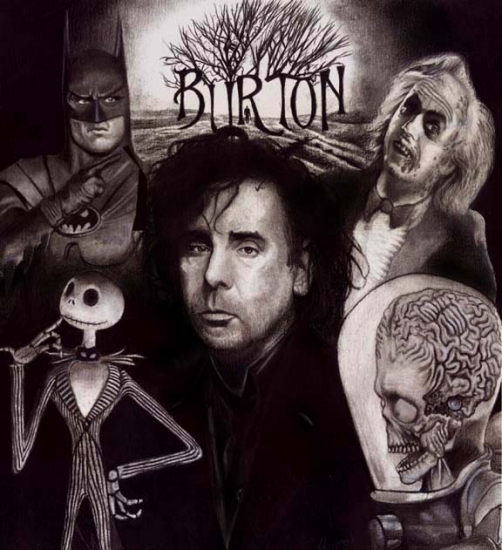
Something to look at and enjoy... you'll find Tim Burton has a unique sense of humor

http://www.timburton.com/

http://homepage.eircom.net/~sebulbac/burton/choose.html

Click choose a story and read some of his work..... Enjoy!


Photot: http://nycsunflower.files.wordpress.com/2009/11/tim-burton-by-hoffman.jpg

Symbolism and Tone (Essay 2)

Today in literature, our interpretations can vary due to different prier experiences. How ever the literary context that makes you feel this way remains the same. In literature, writers develop ways to capture the audience by using elements like symbolism and tone to simulate the readers. In good literary pieces the tone will set the mood and make the targeted audiences feel a connection of some sort to the story. Along with the tone, symbols or things used to refer to something are utilized to deepen our imaginations.


Author Edgar Allen Poe is well known for his work which consist of poems, short stories and satires. Most of his writing deals with death and tragedy. Poe often brings his stories to life with dark romantic tones. In Poe's narrative poem titled Annabel Lee, the tone is gloomy and painful. Poe writes about a couple whom was struck with an untimely death which left a lover lost and empty. Poe sets the tone with his description of the characters heart break. In the first line of the last stanza, Poe wrote "For the moon never beams without bringing me dreams Of the beautiful Annabel Lee"; this quote expresses the suffering that is brought to him when he thinks about his beloved Annabel Lee. The character's anguish takes over his life after her death, proven when he states"And the stars never rise but I feel the bright eyes Of the beautiful Annabel Lee"; for he believes he has nothing else to live for now that she's gone.


Incorporated into his work Poe also presents symbols of a non uniform style. In the poem Annabel Lee, Poe uses symbols like angels and demons to signify the people who were jealous of the couples love and blames their envy for her death. The importance of portraying the people as angels and demons show that people of all kinds, whether they were good hearted or evil spirited people; they both shared the same "covet (stanza 2, line 12)". Also in the forth stanza, Poe uses the symbol of wind to be the cause of Annabel Lee's death : "That the wind came out of the cloud by night chilling and killing my Annabel Lee". With the knowledge of wind having the capability to be sudden and something you can see to the naked eye, the inference of Annabel Lees death can be made that it was unexpected to the couple.

With the contribution of symbols and tones, writing can be transformed into powerful mental imagines that help crystallize your understanding. Symbols and tones can be used to explain what the author is trying to articulate while leaving an everlasting impression on the readers mind.

Sunday, March 14, 2010

Blog 2: poem


I had no clue where to begin, and as you can see it took a while to finally make up my mind. After staring at a blank paper I tried to remember any literary works I've read in the past that could possibly relate to this topic. Then I decided to analyze a poem from Edgar Allen Poe. I've read some of his works before and all shared dark and gothic like tones. Since I was already acquainted with the poet I decided to read a poem I wasn't familiar with. Typing Edgar Allen Poe poems into google, I stumbled upon http://poestories.com/read/annabellee


Annabel Lee


by Edgar Allan Poe
(published 1849)


It was many and many a year ago,
In a kingdom by the sea,
That a maiden there lived whom you may know
By the name of ANNABEL LEE;--
And this maiden she lived with no other thought
Than to love and be loved by me.
She was a child and I was a child,
In this kingdom by the sea,
But we loved with a love that was more than love--
I and my Annabel Lee--
With a love that the winged
seraphs of heaven
Coveted her and me.

And this was the reason that, long ago,
In this kingdom by the sea,
A wind blew out of a cloud by night
Chilling my Annabel Lee;
So that her high-born kinsman came
And bore her away from me,
To shut her up in a
sepulchre
In this kingdom by the sea.

The angels, not half so happy in Heaven,
Went envying her and me:--
Yes! that was the reason (as all men know,
In this kingdom by the sea)
That the wind came out of a cloud, chilling
And killing my Annabel Lee.

But our love it was stronger by far than the love
Of those who were older than we--
Of many far wiser than we-
And neither the angels in Heaven above,
Nor the demons down under the sea,
Can ever dissever my soul from the soul
Of the beautiful Annabel Lee:--

For the moon never beams without bringing me dreams
Of the beautiful Annabel Lee;
And the stars never rise but I see the bright eyes
Of the beautiful Annabel Lee;
And so, all the night-tide, I lie down by the side
Of my darling, my darling, my life and my bride,
In her
sepulchre there by the sea--
In her tomb by the side of the sea


After having to read the poem a couple of times and researching some terms, this poem made me think about life and how short it can be. Edgar Allen Poe writes about two people that are deeply in love. He describes their relationship was envied by the angels in the heavens (the end of the first stanza). The narrator in the poem blames the angels for the misfortune of his love getting ill and dying. He states further that even though his love has past, the angels and demons couldn't take away the love they had for each other. To end the poem, the narrator shares his grief of his lost and expresses that even with his lost he will never stop loving nor forget about his Annabel Lee.


Photo Taken From http://cache.foxsaver.com/thumbnails/2008/o5/12/863405058l.jpg34

Monday, March 8, 2010

About me.......................

To sum up 18 years to fit on this screen is impossible but it doesnt hurt to start off with the basic information. My name is Suda Suthiwong, I'm the youngest of two brothers and a sister. My parents are extremely different and it's amazing they got along at one point to have children. My father is from Thailand and my mother on the other hand is from Puerto Rico.

I've lived in Brooklyn all my life and the best thing I've ever done for myself was leave my friends behind and go to school in Manhattan. I always knew I wanted to do something in the health field and after graduating from Health Professions High School , I became more determined than ever before.