Monday, June 14, 2010

Blog Entry 16: Final Reflection


As the semester comes to an end, I’ll honestly miss this kind of structured class. This course has made me think outside the box when it comes to literature and writing essays. It wasn’t easy to have the semester focus on the topic "the supernatural", however it got me to explore my horizons with the kinds of genres there are. It was hard to get used to but became fun with the different stories we have read.

Instead of being in a regular English class, sitting in normal desks with nothing but books and a teacher in the front of the classroom talking their head off. We were actually involved with the text. You (Professor Smith) encouraged us to go and find out side web sources. You were the first professor that I've had that said it was okay to use Wikipedia.

Personally I think I have progressed from blog entry to blog entry. The first couple of blog entries I felt silly and felt why everyone in the class has to read what I write. But now I see the blog entries as a good way to interact with classmates for help without being shy and not wanting to speak to strangers.

After this class I definitely see stories differently. Now as I read, I instantly notice symbols and archetypes. I take my time to see what the author wants us to know but doesn’t want to say directly. I also like seeing how I can make the story kind of my know with my own interpretations on what the author is trying to say.

I would recommend this class for anyone who doesn’t like reading or writing and for those who think they have read every book. I think this course will change their mindset and make them work harder with such a supernatural topic.

Image From: http://brownsharpie.courtneygibbons.org/wp-content/comics/2008-12-22-nightmares.jpg

Sunday, June 6, 2010

Blog 15: Final Draft and Complete Essay =]


The Story Told Within Nathaniel Hawthorne’s “Young Goodman Brown”

American writer Nathaniel Hawthorne was born July 4th, 1804 in the city of Salem, Massachusetts. Interestingly Hawthorne was originally born with the name Nathaniel Hathorne. A 'w' was added to his last name to disassociate himself with his ancestors that were judges in the seventeenth century Salem witch trials. His grandfather played an important role in the prosecution of a dozen so called witches (NathanielHawthorneBio). With the ancestry in Salem, Hawthorne was known for his dark romanticism. One of Hawthorne’s most common themes to write about is conflicts between good and evil. Beginning his writing career early Hawthorne published most of his writings anonymously (wiki). In 1835, Hawthorne published the short story "Young Goodman Brown." This short story is a great combination of Hawthorne's ancestry as well as his imagination on good and evil.

Young Goodman Brown takes place in the late 17th century; in Salem Massachusetts. The story begins with Goodman Brown about to set off on a trip. His wife Faith tries to get him to put off his journey fearing that something might happen to him. Goodman Brown ensured his wife of his safety and told her to pray for him. After leaving his wife and beginning his journey, Goodman Brown promises himself that after tonight when he finishes his task, he will never leave his wife's side and he will spend the rest of his life together with her. Walking through the dark and mysterious forest, Goodman Brown becomes anxious. A man appears out from the darkness of the forest and seems to be expecting Goodman Brown. The man asks him why he is late. Continuing to walk further into the woods, Goodman Brown informs his now companion that it is getting late and he must return back to his wife. The man ensures Goodman Brown to continue on and while they walk he will convince him why he should go further, however if he is not convincing enough, Goodman Brown could turn and head back. Advancing deeper into the woods with every step, Goodman Brown becomes frustrated with having to complete this task. He tells his companion that he is the first in the family to have to do such an unchristian like task. The companion then tells Goodman Brown that he knows and has met his father and his father’s father, and all too had to complete such a task. He even tells Goodman Brown that his ancestors weren't such faithful Christians and did many unholy deeds.

In denial of his companion’s claims, he is then told that the whole village is filled with wickedness. In agonizing pain, Good Brown proceeds further in the woods. The two men then see a woman in the distance, they approach her and she too is heading to where they are going. Goodman Brown recognizes her, as she taught him catechism. As they continue, Goodman Brown sees more people who he thought were good and faithful Christians. When they finally reach their destination, there is a ceremony around a flame lit altar. To Goodman Browns dismay, he appears at the altar with his wife Faith. About to be covered in blood to steal their alliance with the wickedness, Goodman Brown tells his wife Faith to look into the heavens and resist the evil. In an instant Goodman Brown wakes up on a rock in the forest and heads home to his wife. Unsure what was real or just a dream; Goodman Brown is deeply shaken and is suspicious of everyone around him.

The real history of the setting in Young Goodman Brown; Salem Massachusetts, brings a lot of insight to the story. Salem is the mostly notorious in history for its witch trials in 1692. Citizens of the town encouraged the trails to take palace and prosecute who they believed to be devil worshipers. Having the author Hawthorne actually having a connection to this time, deepens the meaning of the story. Those who were thought to be witches were going against god and worshipping the devil. This is what Goodman Brown is confronted with in the forest. He was forced to see people act out of the social norm and practice something he didn't believe in.

Hawthorne has a way of selecting great word choice to deepen a simple story. He gives characters names that symbolize who they are. Take Young Goodman Brown for an example; referring to him as Young Goodman Brown amplifies his youth and lack of experience. It shows that he is still innocent in the world and isn't yet aware of its true array of colors. The disadvantage of youth can also be the ability to be deceived easily because you are so trust worthy of others; we see that with Young Goodman Brown. Although he is eager to return home, he listens to his companion and travels deeper into the woods. His wife Faith also symbolizes a number of things. In the story she is described as wearing a pink ribbon, the color pink is the product of red and white. Red symbolizes lust and danger, when white stands for purity and innocents. Pink is in between negative and positive but is known as the symbol of pure love (wiki). Faiths name alone says it all, when Young Goodman Brown leaves his wife Faith behind, he also leaves his real Faith with her when he sets out on his journey into the woods. While in the woods his wife Faith appears with him out from nowhere because his faith had came back to him as he tried to overcome the wickedness of the devil.

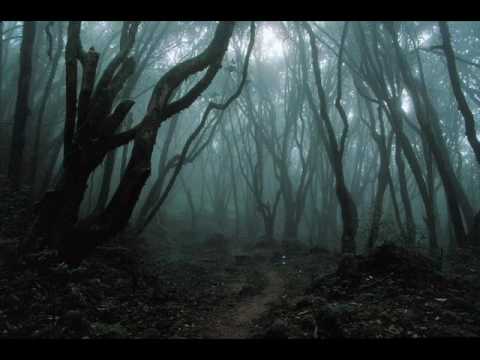
Hawthorne also uses a number of symbols that help bring imagery to the story. The symbols he uses further explains the plot without giving it all away, making the reader interact with the story. The forest was the main setting for the short story. The significance of the forest represents is the mysterious creatures that can be larking in the dark. According to the symbolism dictionary, the forest is a place for testing and holds secrets of nature that one has to find the true meaning of. In a Freudian perspective, the forest can also symbolize the unconscious filled with mysteries (UMICH). Describing Goodman Brown's path as narrow and dark also shows how he is surrounded by wickedness and could only move forward, further into the devils grasp.

When it comes to Goodman Brown's companion, it isn't stated that he is the devil. However as they walk through the forest different things infer to him as the devil, like his serpent like staff. During Hawthorne's description of Goodman Brown’s companion he stated, "But the only thing about him, that could be fixed upon as remarkable, was his staff, which bore the likeness of a great black snake . . ." ( line185). In the dictionary of symbols, serpents represent death, destruction and evil. For the Christian religion the serpent was Satan or the devil disguised to trick Adam and Eve to disregard gods command. Hawthorne gives Goodman Brown's companion a staff that he describes in line 387 “might also be seen to twist and wriggle itself like a live serpent” (YoungGoodmanBrown). The staff shows the devils presence in the forest and when his companion offers it to help Goodman Brown to walk, he refuses to take it. The refusal tells us how reluctant Goodman Brown is to succumb into the evil in the world. Along their journey Goodman Brown finds people in the forest that he believed to be good, honest Christians. Goodman Brown became aware that even people like his old Sunday school teacher and his minister has been taken by the wickedness of the devil.

"Young Goodman Brown" is a story of the secret lives we live and the fight we face against temptation. The theme of the story is that everyone has their own secrets and does things that might not be socially acceptable in society behind closed doors. Hawthorne does a good job of supporting this theme with different symbolic interpretations throughout the story. Although some authors make it difficult to uncover the symbols in their stories, Hawthorne makes them easy to find, which makes the story more enjoyable for any type of reader.

Works Cited

"Forest." University of Michigan. N.p., n.d. Web. 28 May 2010. .

"Nathaniel Hawthorne Biography - life, family, childhood, children, name, history, wife, mother, son, book, old, information, born, college, house, time." Encyclopedia of World Biography. N.p., n.d. Web. 29 May 2010. .

"Pink - Symbolism Wiki." Symbolism Wiki. N.p., n.d. Web. 28 May 2010. .

"Serpent." University of Michigan. N.p., n.d. Web. 28 May 2010. .

"Young Goodman Brown - Wikipedia, the free encyclopedia." Wikipedia, the free encyclopedia. N.p., n.d. Web. 28 May 2010.


Image from:http://american-literature.mhs.marietta-city.org/modules/groups/homepagefiles/announcement/-956598.jpg

Blog 14: What is Left to Do??


Writing this essay isn't so bad however it isn't the easiest either. My main focus that needs to be done it lengthening my descriptions as well as supporting and putting my sources. I need to try and find more significant symbols to discuss and expand on them.


Image From: http://www.nationalnursingreview.com/images/NNR-Cartoon.gif

Monday, May 24, 2010

Blog 13: Full Draft


Young Goodman Brown By Nathaniel Hawthorne

American writer Nathaniel Hawthorne was born July 4th, 1804 in the city of Salem, Massachusetts. Originally born with the name Nathaniel Hathorne, a 'w' was added to his last name to disassociate himself with his ancestors that were judges in the seventeenth century Salem witch trials (NathanielHawthorneBio). With the ancestry in Salem, Hawthorne was known for his dark romanticism. One of Hawthornes most common theme to write about were conflict between good and evil. The short story "Young Goodman Brown" was published in 1835. This short story is a great combination of Hawthornes ancestry past and his imagination.


Young Goodman Brown takes place in the late 17th century; in Salem Massachusetts. The story begins with Goodman Brown about to set off on a trip while his wife Faith tries to get him to put off his journey, fearing that something might happen to him. Goodman Brown ensured his wife of his safety and told her to pray for him. After leaving his wife and beginning his journey, Goodman Brown promises himself that after tonight when he finishes his task, he will never leave his wife's side and he will spend the rest of his life with her. Walking through the dark and mysterious forest, Goodman Brown becomes anxious. A man appears out from the darkness of the forest and seems to be expecting Goodman Brown and asks him why he is late. Continuing to walk further into the woods, Goodman Brown informs his companion that it is getting late and he must return back to his wife. The man ensures Goodman Brown to continue on and while they walk he will convince him why he should go further, how ever if he is not convincing enough, Goodman Brown could turn and head back. Advancing deeper into the woods with every step, Goodman Brown becomes frustrated with having to complete this task. He tells his companion that he is the first in the family to have to so such an unchristian like thing. The companion then tells Goodman Brown that he knows and has met his father and his fathers father, and all too had to complete such a task. He even tells Goodman Brown that his ancestors weren't such faithful Christians and did many unholy deeds.


In denial of his companions claims, he is then told that the whole village is filled with wickedness. In agonizing pain, Good Brown proceeds further in the woods. The two men then see a women in the distance, they approach her and she to is heading to where they are going. Goodman Brown recognises her, as she taught him catechism. As they continue, Goodman Brown sees more people who he thought were good and faithful Christians. When they finally reach there destination, it is a ceremony around a flame lit alter. To Goodman Browns dismay, he appears at the alter with his wife Faith. About to be covered in blood to steal their alliance with the wickedness, Goodman Brown tells his wife Faith to look into the heavens and resist the evil. In an instant Goodman Brown wakes up on a rock in the forest and heads home to his wife. Unsure what was real or just a dream, Goodman Brown is deeply shaken and is suspicious of everyone around him.


Hawthorne has a way of selecting great word choice to deepen a simple story. He gives characters names that symbolizes who they are. Take Young Goodman Brown for an example. Referring to him as Young Goodman Brown amplifies his youth and lack of experience. It shows that he is still innocent in the world and isn't yet aware of its true array of colors. The disadvantage of youth can also being able to be deceived easily because you are so trust worthy of others; and we see that with Young Goodman Brown, although he is eager to return home, he listens to his companion and travels deeper into the woods. His wife Faith also symbolizes a number of things. In the story she is described as wearing a pink ribbon, the color pink is the product of red and white. Red symbolizes lust and danger, when white stands for purity and innocents. Pink is in between negative and positive but is known as the symbol of pure love (wiki). Faiths name alone says it all, when Young Goodman Brown leaves his wife Faith behind, he also leaves his real Faith with her when he sets out on his journey into the woods. While in the woods his wife Faith appears with him out from no where because his faith had came back to him and he tried to overcome the wickedness of the devil.

Hawthorne uses the forest as the main setting for the short story. The significance of the forest represents is the mysterious creatures that can be larking in the dark. According to the symbolism dictionary, the forest is a place for testing and holds secrets of nature that one has to find the true meaning of. In a Freudian perspective, the forest can also symbolize the unconscious filled with mysteries (UMICH). Describing Goodman Brown's path as narrow and dark shows how he is surrounded by wickedness and could only move forward, further in.

When it comes to Goodman Brown's companion, it isn't stated that he is the devil, however as they walk through the forest different things infer to him as the devil, like his serpent like staff. During Hawthorne's description of Goodman Brown"s companion he stated, "But the only thing about him, that could be fixed upon as remarkable, was his staff, which bore the likeness of a great black snake . . ." ( line185). In the dictionary of symbols, serpents represent death, destruction and evil. For the Christian religion the serpent was Satan or the devil guises trick Adam and Eve to disregard gods command.Hawthorne gives Goodman Brown's companion a staff that he describes in line 387 “might also be seen to twist and wriggle itself like a live serpent” (YoungGoodmanBrown). The staff shows the devils presence in the forest and when his companion offers it to help Goodman Brown to walk, he refuses to take it and this tells us of how reluctant Goodman Brown is to succumb into the evil in the world. Along their journey Goodman Brown finds people in the forest that he believed to be good, honest Christians. Goodman Brown became aware that even people like his old Sunday school teacher and his minister has been taken by the wickedness of the devil.

"Young Goodman Brown" is a story of secret lives we live and the fight we face against temptation. The theme of the story is that everyone has there own secrets and do things that might not be socially acceptable in society behind closed doors. Hawthorne does a good job of supporting this theme with different symbolic interpretations throughout the story. Although some authors make it difficult to uncover the symbols in their stories, Hawthorne makes them easy to find, thus producing a story more enjoyable for the average reader.

Works Cited

"Forest." University of Michigan. N.p., n.d. Web. 28 May 2010. .

"Nathaniel Hawthorne Biography - life, family, childhood, children, name, history, wife, mother, son, book, old, information, born, college, house, time." Encyclopedia of World Biography. N.p., n.d. Web. 29 May 2010. .

"Pink - Symbolism Wiki." Symbolism Wiki. N.p., n.d. Web. 28 May 2010. .

"Serpent." University of Michigan. N.p., n.d. Web. 28 May 2010. .


"Young Goodman Brown - Wikipedia, the free encyclopedia." Wikipedia, the free encyclopedia. N.p., n.d. Web. 28 May 2010. .


Image From: http://i.ytimg.com/vi/b6R52V9_S0I/0.jpg

Monday, May 17, 2010

Blog 12 , Pre writing: Young Goodman Brown

Young Goodman Brown By Nathaniel Hawthorne

American writer Nathaniel Hawthorne was born July 4th, 1804 in the city of Salem, Massachusetts. Originally born with the name Nathaniel Hathorne, a 'w' was added to his last name to disassociate himself with his ancestors that were judges in the seventeenth century Salem witch trials (NathanielHawthorneBio). With the ancestry in Salem, Hawthorne was known for his dark romanticism. One of Hawthornes most common theme to write about were conflict between good and evil. The short story "Young Goodman Brown" was published in 1835. This short story is a great combination of Hawthornes ancestry past and his imagination.


Young Goodman Brown takes place in the late 17th century; in Salem Massachusetts. The story begins with Goodman Brown about to set off on a trip while his wife Faith tries to get him to put off his journey, fearing that something might happen to him. Goodman Brown ensured his wife of his safety and told her to pray for him. After leaving his wife and beginning his journey, Goodman Brown promises himself that after tonight when he finishes his task, he will never leave his wife's side and he will spend the rest of his life with her. Walking through the dark and mysterious forest, Goodman Brown becomes anxious. A man appears out from the darkness of the forest and seems to be expecting Goodman Brown and asks him why he is late. Continuing to walk further into the woods, Goodman Brown informs his companion that it is getting late and he must return back to his wife. The man ensures Goodman Brown to continue on and while they walk he will convince him why he should go further, how ever if he is not convincing enough, Goodman Brown could turn and head back. Advancing deeper into the woods with every step, Goodman Brown becomes frustrated with having to complete this task. He tells his companion that he is the first in the family to have to so such an unchristian like thing. The companion then tells Goodman Brown that he knows and has met his father and his fathers father, and all too had to complete such a task. He even tells Goodman Brown that his ancestors weren't such faithful Christians and did many unholy deeds.


In denial of his companions claims, he is then told that the whole village is filled with wickedness. In agonizing pain, Good Brown proceeds further in the woods. The two men then see a women in the distance, they approach her and she to is heading to where they are going. Goodman Brown recognises her, as she taught him catechism. As they continue, Goodman Brown sees more people who he thought were good and faithful Christians. When they finally reach there destination, it is a ceremony around a flame lit alter. To Goodman Browns dismay, he appears at the alter with his wife Faith. About to be covered in blood to steal their alliance with the wickedness, Goodman Brown tells his wife Faith to look into the heavens and resist the evil. In an instant Goodman Brown wakes up on a rock in the forest and heads home to his wife. Unsure what was real or just a dream, Goodman Brown is deeply shaken and is suspicious of everyone around him.


Hawthorne has a way of selecting great word choice to deepen a simple story. He gives characters names that symbolizes who they are. Take Young Goodman Brown for an example. Referring to him as Young Goodman Brown amplifies his youth and lack of experience. It shows that he is still innocent in the world and isn't yet aware of its true array of colors. The disadvantage of youth can also being able to be deceived easily because you are so trust worthy of others; and we see that with Young Goodman Brown, although he is eager to return home, he listens to his companion and travels deeper into the woods. His wife Faith also symbolizes a number of things. In the story she is described as wearing a pink ribbon, the color pink is the product of red and white. Red symbolizes lust and danger, when white stands for purity and innocents. Pink is in between negative and positive but is known as the symbol of pure love (wiki). Faiths name alone says it all, when Young Goodman Brown leaves his wife Faith behind, he also leaves his real Faith with her when he sets out on his journey into the woods. While in the woods his wife Faith appears with him out from no where because his faith had came back to him and he tried to overcome the wickedness of the devil.


Works Cited

"Nathaniel Hawthorne Biography - life, family, childhood, children, name, history, wife, mother, son, book, old, information, born, college, house, time." Encyclopedia of World Biography. N.p., n.d. Web. 29 May 2010. .

"Pink - Symbolism Wiki." Symbolism Wiki. N.p., n.d. Web. 28 May 2010. .


Image From: http://garble.files.wordpress.com/2007/11/goodmanbrown.jpg

Monday, May 10, 2010

Blog 11: Chosen Story; Young Goodman Brown by Nathaniel Hawthrone


This short story was published in 1835. Written by American author Nathaniel Hawthorne. The short story takes place in the late 17th century, in Salem Massachetts. The story all begins when the main character, Goodman Brown leaves his home and wife for 3 months. While gone he travels deep into the forest. Having to battle with what might be real or a figure of his imgaination, Goodman Brown has to fight to kept his faith. After returning from his journey Goodman Brown is uncertain what just happened and sees everyone around him differently.

I decided to pick this story because I was unsure of what to write about. Coming to this class, reading about the supernatural wasn't something I was used to (I only like watching the movies), so I read all the stories on the class blog and remembered reading this story before many years ago and enjoyed it so I don't see why I wouldn't now.

The approach I've decided to analyze the story is by picking out symbols and acrhetypes in the story.


Imagine from: http://coursesite.uhcl.edu/hsh/whitec/LITR/4232/images/authors/hawgoodbrown.bmp

Monday, May 3, 2010

Blog 10 Reflection_


In the beginning of this course, I thought it would be fairely easier then other English courses, however I was horribly mistaken. Having to do essay's online rather just handing papers in, is a bit more difficult. Besides that, the class calls for the deep understanding of different elements so we can find examples and further break down text. Out from all of the elements and things we have discussed in class so far, I'll have to say Joseph Campbell's Hero's Quest has been the most interesting to me. I find it how crazy Campbell hit the needle right on its head when he simplifies how the story is supposed to be told and how all of literature and film follows what you can call a cycle of stages to receive a similar outcome which would be becoming a hero, helping others or over coming self battles (Hero's Quest). I always personally would say to people "oh, that ending was predictable" or " that was your typical action, romance, horror movie" and now reading up on Campbell's work I finally understand why it always seemed like that to me. Now I feel I can analyze movies better now knowing how the characters journey should go about and I could see how directors decides to make characters go through Campbell's monomyth.